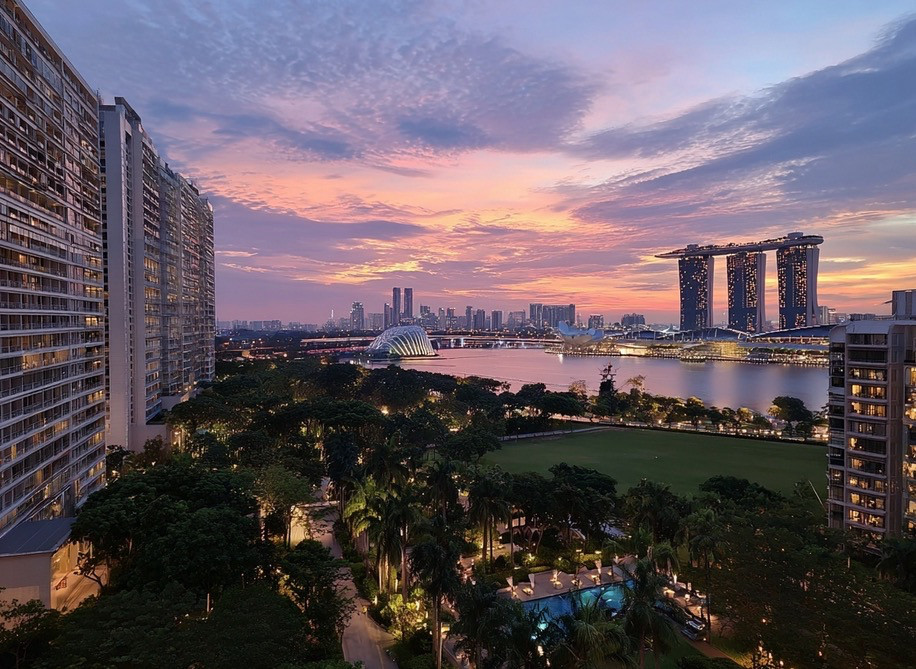
Your Definitive Guide to Buying a Condo in Singapore as a Foreigner
Singapore, a vibrant city-state renowned for its economic stability, political transparency, and high quality of life, has long been a magnet for international investors and expatriates. Its robust property market, characterized by consistent growth and strong rental yields, presents an attractive proposition for those looking to diversify their portfolio or secure a luxurious home in a global hub.
While the prospect of owning a piece of this prosperous island nation is appealing, the process for foreigners can appear complex, fraught with specific regulations, taxes, and financing considerations. This comprehensive guide aims to demystify the journey of buying a condominium in Singapore, providing a clear, step-by-step roadmap for foreign buyers.
I. Why Singapore? The Allure for Foreign Investors
Before delving into the "how," it’s crucial to understand the compelling reasons why Singapore stands out as a prime destination for property investment:
- Economic & Political Stability: Singapore boasts one of the world’s most stable economies, supported by strong governance, a pro-business environment, and a consistent track record of growth. This stability provides a secure environment for long-term property investment.
- Strategic Location: Positioned at the crossroads of major trade routes in Southeast Asia, Singapore offers unparalleled connectivity to global markets, making it an ideal base for regional and international businesses.
- High Quality of Life: With world-class infrastructure, healthcare, education, and a diverse cultural scene, Singapore consistently ranks high in global liveability indices. Its clean, green environment and low crime rates contribute to an exceptional living experience.
- Strong Property Market Fundamentals: Despite cooling measures, Singapore’s property market remains resilient, driven by limited land supply, continuous population growth, and strong demand from both local and international buyers. This translates to potential for capital appreciation and healthy rental demand.
- Transparent Legal System: Singapore’s legal framework is robust and transparent, ensuring fair play and protecting property rights for all owners, including foreigners.
- Global Talent Hub: The government’s continuous efforts to attract global talent ensure a steady influx of expatriates, contributing to a robust rental market, particularly for condominiums.
II. Eligibility & Restrictions: What Foreigners Can (and Cannot) Buy
One of the most critical aspects for foreign buyers to understand is the specific property types they are permitted to purchase in Singapore. The rules are clear:
- Private Condominiums (Apartments): This is the most common and straightforward option for foreigners. There are generally no restrictions on foreigners buying strata-titled apartment units within a private condominium development. These units come with shared facilities like swimming pools, gyms, and security.
- Landed Properties in Sentosa Cove: This is the only designated area where foreigners can purchase landed properties (such as bungalows, semi-detached houses, and terrace houses) without needing specific government approval. These properties are typically high-end and come with a premium price tag.
- Other Landed Properties (Generally Restricted): Foreigners are generally not allowed to purchase other types of landed residential properties in Singapore, which include bungalows, semi-detached houses, terrace houses, and shophouses. Exemptions are rare and typically require approval from the Singapore Land Authority (SLA), usually granted only to Singapore Permanent Residents (PRs) who have demonstrated significant economic contribution and intent to reside permanently.
- HDB Flats (Public Housing): Foreigners are strictly prohibited from buying new or resale HDB (Housing & Development Board) flats, which are government-subsidized public housing. Even Singapore Permanent Residents (PRs) have specific eligibility criteria, including a minimum PR status duration (usually 3 years) and strict ownership rules.
Key Takeaway: For most foreign investors, private condominiums are the primary focus.
III. The Step-by-Step Buying Process for Foreigners
The journey of purchasing a condo in Singapore involves several distinct stages. Engaging experienced professionals (property agents and lawyers) is highly recommended to navigate this process smoothly.
A. Financial Planning & Budgeting
- Determine Your Budget: Beyond the property price, factor in all associated costs: stamp duties (Buyer’s Stamp Duty & Additional Buyer’s Stamp Duty), legal fees, agent commissions, valuation fees, and potential renovation costs.
- Secure Mortgage Pre-Approval: Before actively searching, get an "Approval-in-Principle" (AIP) or "In-Principle Approval" (IPA) from a Singaporean bank. This indicates the maximum loan amount you can borrow, giving you a realistic budget and strengthening your offer. Banks will assess your income, credit history, and existing debt.
B. Engage Professionals
- Property Agent: A reputable real estate agent specializing in foreign buyers is invaluable. They provide market insights, shortlist properties, arrange viewings, negotiate on your behalf, and guide you through the administrative process. In Singapore, while the buyer can pay an agent, it’s common for the seller’s agent to split commission with the buyer’s agent, making it potentially "free" for the buyer. Clarify commission structure upfront.
- Conveyancing Lawyer: A lawyer specializing in property transactions (conveyancing) is mandatory. They conduct due diligence, prepare legal documents, handle the transfer of ownership, and ensure all legal aspects are compliant.
C. Property Search & Shortlisting
Work with your agent to identify properties that meet your criteria:
- Location: Consider proximity to work, schools, amenities, MRT stations, and your lifestyle preferences. Popular districts include Orchard (luxury), CBD (convenience), East Coast (lifestyle), and District 9/10/11 (prime residential).
- Type: New launch (uncompleted projects) vs. Resale (completed units).
- Size & Layout: Number of bedrooms, floor area, layout efficiency.
- Leasehold vs. Freehold: Freehold properties offer indefinite ownership, while leasehold properties (most common, 99-year or 999-year leases) have a finite ownership period. Leasehold properties are generally more affordable than freehold.
- Amenities: Facilities within the condo (pool, gym, tennis courts, etc.).
D. Making an Offer & Option to Purchase (OTP)
- Negotiation: Your agent will negotiate the purchase price with the seller or their agent.
- Option to Purchase (OTP): Once a price is agreed upon, you will be issued an OTP by the seller. This is a legal document. You typically pay a 1% Option Fee (non-refundable) to the seller, which grants you the exclusive right to purchase the property within a specific period (usually 14 days).
E. Legal Due Diligence & Loan Application
- Lawyer’s Role: Your conveyancing lawyer will conduct thorough due diligence, checking the property title, ensuring there are no encumbrances, and reviewing all relevant legal documents.
- Formal Loan Application: Submit your formal loan application to your chosen bank. They will require various documents, including income statements, tax returns, and the OTP. The bank will also arrange for a valuation of the property.
F. Exercising the OTP
Within the option period (typically 14 days), if you decide to proceed, you will need to "exercise the Option." This involves signing the OTP and paying the Option Exercise Fee, usually 4% of the purchase price (making the total initial payment 5% of the purchase price). This 5% forms part of your down payment.
G. Payment of Stamp Duties
This is a significant cost for foreigners. Your lawyer will guide you on the payment of:
- Buyer’s Stamp Duty (BSD): Payable by all buyers, calculated on a progressive scale based on the purchase price or market value, whichever is higher.
- Additional Buyer’s Stamp Duty (ABSD): This is a cooling measure and is significantly higher for foreigners. (Details below).
These duties are usually payable within 14 days of exercising the OTP.
H. Completion & Key Handover
The completion period is typically 8-12 weeks from the date of exercising the OTP.
- Final Payments: The remaining balance of the purchase price (minus your loan amount and initial payments) and all other fees are paid.
- Legal Transfer: Your lawyer will facilitate the legal transfer of ownership.
- Key Handover: Upon successful completion, you will receive the keys to your new condominium.
IV. Understanding the Costs Involved (Beyond Purchase Price)
Beyond the agreed purchase price, foreign buyers must be prepared for several substantial additional costs:
A. Stamp Duties
-
Buyer’s Stamp Duty (BSD):
- First S$180,000: 1%
- Next S$180,000: 2%
- Next S$640,000: 3%
- Remaining Amount: 4%
(Example: For a S$1,500,000 property, BSD would be S$39,600)
-
Additional Buyer’s Stamp Duty (ABSD):
- For Foreigners: As of April 27, 2023, the ABSD rate for foreigners buying any residential property is 60% of the purchase price or market value, whichever is higher. This is a significant cooling measure designed to moderate demand.
- Exemptions: Citizens of certain countries (currently USA, Switzerland, Liechtenstein, Norway, Iceland) under specific Free Trade Agreements (FTAs) may apply for ABSD remission, allowing them to be treated as Singapore Citizens for ABSD purposes (i.e., no ABSD for their first property). Do check the latest IRAS guidelines.
B. Legal Fees
Typically range from S$2,500 to S$5,000+, depending on the complexity of the transaction and the law firm.
C. Agent Commission
While technically payable by either party, it’s common in Singapore for the seller to pay their agent, who then splits with the buyer’s agent. Always clarify this with your agent upfront. If you engage a buyer’s agent solely, you might pay 1% of the purchase price.
D. Property Tax
An annual tax levied by the government, calculated based on the Annual Value (AV) of the property (estimated annual rent if rented out). For non-owner-occupied residential properties (which applies if you don’t reside in it yourself), the tax rate is higher, ranging from 12% to 36% of the AV. Owner-occupied properties enjoy lower rates.
E. Maintenance Fees
Monthly or quarterly fees paid to the Management Corporation Strata Title (MCST) for the upkeep of common areas, facilities, and security. These vary significantly depending on the condo’s size, age, and facilities.
F. Loan-Related Costs
- Valuation Fee: Paid to the bank for property valuation (approx. S$300-S$500).
- Processing Fee: Some banks may charge a loan processing fee.
- Fire Insurance: Mandatory for mortgaged properties.
G. Renovation & Furnishing
Factor in costs for interior design, renovations, and furnishing to make the condo move-in ready.
V. Financing Your Purchase: Mortgage Options for Foreigners
Securing a mortgage from a Singaporean bank is generally straightforward for foreigners, provided they meet the eligibility criteria.
A. Banks Offering Loans to Foreigners
Major Singaporean banks like DBS, OCBC, UOB, as well as international banks with a presence in Singapore (e.g., HSBC, Standard Chartered, Citibank), offer home loans to foreigners.
B. Loan-to-Value (LTV) Limits
For foreigners, the maximum LTV for a first residential property loan is typically up to 75% of the property’s purchase price or valuation, whichever is lower. This means you will need to fund at least 25% as a down payment (including the initial 5% cash payment). Subsequent property loans will have lower LTV limits (e.g., 55-65%).
C. Interest Rates
Singapore offers competitive interest rates, which can be fixed or floating (pegged to SIBOR, SORA, or internal board rates). Consult with mortgage brokers or banks to compare options.
D. Documents Required
Common documents include:
- Passport and valid Singapore visa (if applicable).
- Proof of income (employment contracts, payslips, bank statements, tax returns).
- Credit reports from your home country.
- Details of existing assets and liabilities.
- Option to Purchase (OTP) for the property.
VI. New Launch vs. Resale Condos: Pros & Cons
Foreign buyers have the choice between purchasing a brand-new, uncompleted project (new launch) or a pre-existing unit (resale).
A. New Launch Condos
Pros:
- Brand New: Modern designs, new facilities, minimal maintenance initially.
- Progressive Payments: Payments are staggered throughout the construction period, easing cash flow.
- Potential for Appreciation: Early buyers might benefit from price appreciation as the project develops.
- Developer Warranties: Protection against defects for a period after completion.
Cons:
- Long Waiting Time: You won’t be able to move in or rent out immediately.
- Uncertainty: You’re buying based on showflat and floor plans; the actual unit might differ slightly.
- Rental Income Delay: No rental income until completion.
B. Resale Condos
Pros:
- Immediate Occupancy/Rental: You can move in or rent out the property almost immediately after completion.
- Established Neighbourhoods: Known amenities, transport links, and community.
- View Actual Unit: You can inspect the exact unit, its views, and the building’s condition.
- Negotiation Flexibility: Potentially more room for price negotiation.
Cons:
- Older Facilities: Facilities might be older and require more maintenance.
- Higher Upfront Payment: Full down payment required earlier.
- Renovation Needs: May require renovations to suit your taste.
VII. Key Considerations & Due Diligence
- Location, Location, Location: This cannot be stressed enough. Proximity to amenities, transport nodes, reputable schools, and business districts significantly impacts property value and rental demand.
- Leasehold vs. Freehold: Understand the implications of each. While freehold offers perpetual ownership, leasehold (especially 99-year) properties are common and can still be excellent investments, particularly if they are in prime locations and have a long remaining lease.
- Developer Reputation: For new launches, research the developer’s track record, quality of past projects, and financial stability.
- Unit Orientation & Layout: Consider factors like sunlight, wind flow, noise levels, and the efficiency of the layout.
- Amenities & Facilities: Assess if the condo’s facilities align with your lifestyle needs.
- Market Trends: Stay informed about current property market trends, rental yields in specific areas, and upcoming developments that might affect property values.
- Exit Strategy: Consider your long-term plans. How easy will it be to sell or rent out the property when you decide to exit your investment?
VIII. Post-Purchase Responsibilities
Once you own the condo, you’ll have ongoing responsibilities:
- Annual Property Tax: Ensure timely payment of your property tax bill.
- Maintenance Fees: Pay your monthly/quarterly maintenance fees to the MCST.
- Property Management (if renting out): If you intend to rent out the unit, you might consider engaging a property management company to handle tenancy agreements, maintenance, and tenant issues.
- Tenancy Laws: Familiarize yourself with Singapore’s tenancy laws if you become a landlord.
IX. Conclusion
Buying a condominium in Singapore as a foreigner is a significant investment that promises access to one of the world’s most dynamic and stable real estate markets. While the Additional Buyer’s Stamp Duty (ABSD) makes it a costly endeavor, the long-term benefits of owning a piece of this global city often outweigh the initial outlay for serious investors and those seeking a permanent base.
The key to a successful purchase lies in thorough preparation, a clear understanding of the regulations, robust financial planning, and the invaluable guidance of experienced local professionals – a trusted property agent and a skilled conveyancing lawyer. By following this guide and seeking expert advice at each stage, foreign buyers can confidently navigate Singapore’s property landscape and secure their dream home or investment.
Disclaimer: This article provides general information and does not constitute legal, financial, or real estate advice. Property rules and tax rates in Singapore can change. Foreign buyers are strongly advised to consult with qualified real estate agents, conveyancing lawyers, and financial advisors for personalized advice tailored to their specific circumstances before making any property investment decisions.