Harnessing the Sun: The Growing Appeal of Solar Energy Systems for Homes in Asia
Introduction: Asia’s Energy Crossroads
Asia, a continent of unprecedented growth, urbanization, and technological advancement, stands at a critical juncture concerning its energy future. With a burgeoning population and rapidly expanding economies, the demand for electricity is soaring. Historically, this demand has largely been met by fossil fuels, leading to significant environmental concerns, energy security vulnerabilities, and health crises due to air pollution. However, a profound shift is underway. Across the diverse landscapes of Asia – from the bustling megacities of East Asia to the remote villages of Southeast Asia and the vast plains of South Asia – homeowners are increasingly turning to a cleaner, more sustainable, and economically viable alternative: solar energy systems.
The residential solar sector in Asia is experiencing exponential growth, driven by a confluence of factors: plummeting technology costs, rising awareness of climate change, proactive government policies, and a desire for greater energy independence. This article delves into the intricacies of solar energy systems for homes in Asia, exploring their benefits, components, types, regional nuances, challenges, and the bright prospects that lie ahead.
The Asian Context: Why Solar is Imperative
Asia’s unique characteristics make it a fertile ground for solar adoption:
- High Energy Demand: Rapid economic development in countries like China, India, and Vietnam has led to a dramatic increase in per capita energy consumption.
- Energy Security Concerns: Many Asian nations are net importers of fossil fuels, making them vulnerable to global price fluctuations and supply chain disruptions. Domestic solar power enhances energy sovereignty.
- Environmental Imperative: Asia is home to some of the world’s most polluted cities. Solar energy offers a direct path to reducing carbon emissions and improving air quality, aligning with global climate goals.
- Abundant Solar Resource: A significant portion of Asia, particularly South and Southeast Asia, receives high levels of solar insolation (sunlight), making it ideal for PV (photovoltaic) electricity generation.
- Rural Electrification: Millions in remote areas still lack access to reliable grid electricity. Off-grid solar solutions offer a transformative pathway to development and improved living standards.
- Declining Costs: The global reduction in solar panel and battery costs has made residential solar an increasingly attractive and affordable investment for homeowners across various income brackets.
The Advantages for Asian Homeowners
For individual homeowners, the decision to install a solar energy system comes with a multitude of tangible benefits:
- Significant Cost Savings: By generating their own electricity, homeowners can drastically reduce or even eliminate their monthly electricity bills. In many Asian countries with escalating utility rates, this translates into substantial long-term savings. Net metering policies, where available, allow excess electricity to be sold back to the grid, further enhancing profitability.
- Energy Independence and Reliability: Solar systems provide a degree of independence from the conventional grid. For homes in regions prone to power outages or with unreliable grid infrastructure, hybrid or off-grid systems with battery storage offer uninterrupted power supply, enhancing comfort and security.
- Environmental Stewardship: Installing solar panels directly contributes to reducing one’s carbon footprint. It lessens reliance on fossil fuels, mitigates air pollution, and supports the transition to a cleaner, greener energy system – a growing priority for environmentally conscious consumers.
- Increased Property Value: Homes equipped with solar energy systems are often perceived as more modern, energy-efficient, and desirable, potentially increasing their market value.
- Government Incentives: Many Asian governments offer various incentives, such as feed-in tariffs (FiTs), tax credits, subsidies, and low-interest loans, making the initial investment more manageable and accelerating the payback period.
- Low Maintenance: Modern solar systems are robust and require minimal maintenance, typically limited to occasional cleaning of panels and routine checks.
Understanding the Components of a Residential Solar System
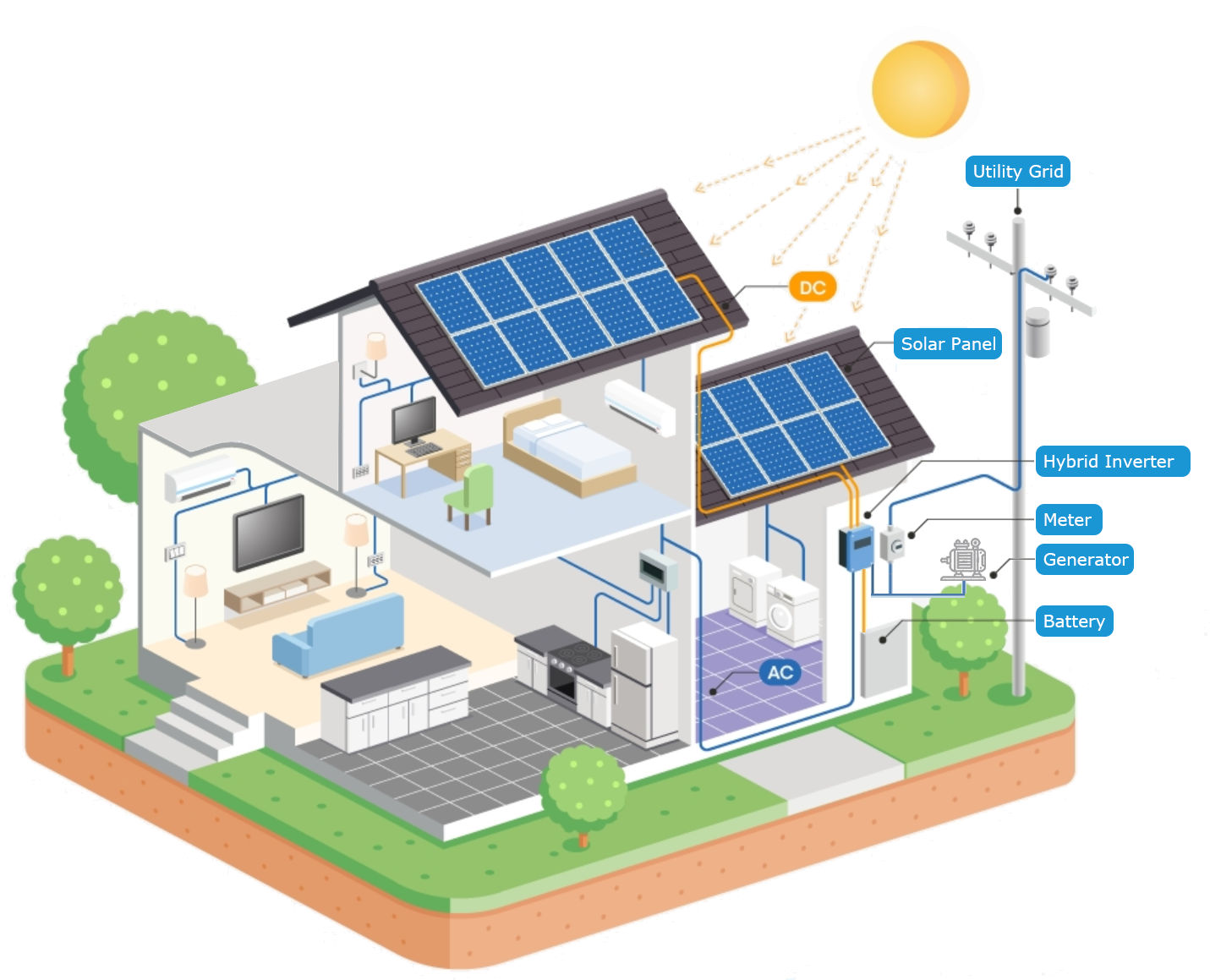
A typical residential solar energy system comprises several key components working in concert:
-
Solar Panels (Photovoltaic Modules): These are the heart of the system, converting sunlight directly into direct current (DC) electricity.
- Types: Monocrystalline (higher efficiency, sleek look), Polycrystalline (slightly lower efficiency, more affordable), and Thin-film (flexible, less efficient, niche applications). Monocrystalline panels are increasingly dominant in the residential market due to improving cost-effectiveness.
- Efficiency: Measured by the percentage of sunlight converted into electricity. Modern panels range from 18% to over 22%.
- Durability: Designed to withstand harsh weather conditions, with lifespans typically exceeding 25-30 years.
-
Inverter: This crucial device converts the DC electricity generated by the solar panels into alternating current (AC) electricity, which is what household appliances use and what the utility grid operates on.
- String Inverters: Most common, connect multiple panels in "strings."
- Microinverters: Installed on individual panels, optimizing performance for each panel and mitigating shading issues.
- Hybrid Inverters: Combine the functions of a solar inverter and a battery inverter, essential for systems with battery storage.
-
Mounting System: This hardware secures the solar panels to the roof or ground. It must be robust, weatherproof, and designed to optimize the angle and orientation of the panels for maximum sunlight exposure. Different roof types (tile, metal, concrete) require specific mounting solutions.
-
Battery Storage (Optional but Growing): Lithium-ion batteries are becoming increasingly popular for residential solar systems. They store excess solar energy generated during the day for use at night, during power outages, or to maximize self-consumption.
- Benefits: Backup power, increased self-sufficiency, time-of-use optimization (charging when electricity is cheap, discharging when expensive).
-
Monitoring System: Most modern solar systems come with monitoring software or apps that allow homeowners to track their system’s performance, electricity generation, consumption, and battery status in real-time, often remotely.
-
Balance of System (BOS): This includes all other electrical components like wiring, conduit, disconnects, circuit breakers, and a production meter (for grid-tied systems).
Types of Residential Solar Systems
The choice of system type depends on the homeowner’s specific needs, location, and access to the utility grid:
-
Grid-Tied (On-Grid) Systems:
- Description: The most common type, connected to the local utility grid. When the solar panels produce more electricity than the home needs, the excess is fed back into the grid (often with net metering), and the homeowner receives credit. When solar production is insufficient (e.g., at night), the home draws power from the grid.
- Advantages: Lower upfront cost (no batteries needed), reliable backup from the grid, potential for income through net metering.
- Disadvantages: Does not provide power during grid outages unless equipped with a specific "grid-tied with backup" inverter.
-
Off-Grid Systems:
- Description: Completely independent of the utility grid. All electricity generated must be consumed directly or stored in batteries. Essential for remote locations without grid access.
- Advantages: Complete energy independence, ideal for rural electrification.
- Disadvantages: Higher upfront cost due to large battery bank requirement, complex sizing, reliance on battery capacity during prolonged cloudy periods.
-
Hybrid Systems:
- Description: Combine the best features of grid-tied and off-grid systems. Connected to the grid, but also include battery storage.
- Advantages: Provides backup power during outages, allows for self-consumption optimization, can still participate in net metering.
- Disadvantages: Higher cost than a simple grid-tied system due to batteries and hybrid inverter.
Key Considerations Before Installation in Asia
Before investing in a residential solar system, Asian homeowners should consider several critical factors:
-
Site Assessment:
- Sunlight Exposure: The roof must receive ample, unobstructed sunlight throughout the day. Shading from trees, adjacent buildings, or roof structures can significantly reduce efficiency.
- Roof Integrity: The roof must be structurally sound to support the weight of the panels and mounting system, and be in good condition to last the lifespan of the solar system.
- Orientation and Tilt: Optimizing the panel’s angle and orientation (ideally south-facing in the Northern Hemisphere, north-facing in the Southern Hemisphere) maximizes energy production.
-
Energy Consumption:
- Audit: Understand your household’s average daily and peak electricity consumption to properly size the system. This avoids undersizing (not enough power) or oversizing (unnecessary cost).
- Efficiency: Prioritize energy efficiency upgrades (e.g., LED lighting, efficient appliances) before installing solar to reduce overall system size and cost.
-
Budget and Financing:
- Upfront Cost: Solar systems represent a significant investment. Obtain multiple quotes from reputable installers.
- Financing Options: Explore various financing models, including outright purchase, solar loans from banks, or lease/PPA (Power Purchase Agreement) options where available, which allow third-party ownership and maintenance.
- Return on Investment (ROI): Calculate the payback period based on energy savings, incentives, and initial investment.
-
Local Regulations and Incentives:
- Permits: Understand the local permitting requirements, which can vary greatly even within countries.
- Net Metering/Feed-in Tariffs: Investigate the availability and terms of net metering or FiT programs, which significantly impact the financial viability of grid-tied systems.
- Subsidies/Tax Credits: Research any national or local government incentives that can reduce the initial cost.
-
Installer Selection:
- Reputation and Experience: Choose a certified and experienced installer with a proven track record.
- Warranties: Ensure comprehensive warranties on panels (performance and product), inverters, and installation workmanship.
- After-Sales Service: Check for reliable customer support and maintenance services.
Challenges and Overcoming Them in the Asian Context
While the outlook is overwhelmingly positive, residential solar in Asia faces specific challenges:
-
Upfront Cost: Despite falling prices, the initial investment can still be substantial for many households.
- Solution: Government subsidies, innovative financing models (e.g., microfinance for rural solar, green loans), and community solar programs can help bridge this gap.
-
Policy Inconsistency and Uncertainty: Frequent changes or lack of clarity in government policies (e.g., net metering rules, subsidies) can deter investment.
- Solution: Strong, long-term policy frameworks, regulatory certainty, and transparent implementation are crucial to build investor and consumer confidence.
-
Grid Integration Issues: Overburdened or outdated grid infrastructure in some regions may struggle to integrate large amounts of distributed solar power, leading to technical challenges or limitations on grid export.
- Solution: Investment in smart grid technologies, grid modernization, and distributed energy resource management systems are essential.
-
Space Constraints in Urban Areas: High-density urban living in many Asian cities means limited roof space, especially for apartments or smaller homes.
- Solution: Development of high-efficiency panels, vertical solar solutions, community solar projects (off-site), and innovative building-integrated photovoltaics (BIPV).
-
Weather Extremes: Asia experiences diverse weather, including monsoons, typhoons, and extreme heat. Panels must be durable and installations must be robust.
- Solution: Use of high-quality, certified panels and mounting systems, proper engineering, and regular maintenance.
A Regional Snapshot: Solar Adoption Across Asia
The pace and nature of residential solar adoption vary significantly across Asia:
-
East Asia (China, Japan, South Korea): These nations are global leaders in solar technology and deployment.
- China: The world’s largest solar market, China boasts ambitious targets for distributed generation. While large-scale solar farms are prominent, residential rooftop solar is rapidly expanding, supported by generous subsidies and policies to electrify rural areas.
- Japan: A mature market with high energy prices and strong environmental consciousness. Japan pioneered feed-in tariffs and continues to see robust residential solar growth, often coupled with battery storage for resilience against natural disasters.
- South Korea: Actively promoting residential solar through incentives and a focus on smart grids and energy independence.
-
South Asia (India): A market with immense potential due to high solar insolation and a vast population, much of which lacks reliable grid access.
- India: The National Solar Mission has driven significant growth. Residential rooftop solar is a key focus for urban areas, while off-grid solutions are transformative for rural electrification, powering homes, schools, and health centers. State-level policies and competitive costs are making solar highly attractive.
-
Southeast Asia (Vietnam, Philippines, Thailand, Indonesia, Malaysia): An emerging powerhouse for residential solar, driven by surging energy demand, falling costs, and unique geographical challenges (e.g., island nations).
- Vietnam: Has seen explosive growth in rooftop solar, initially driven by attractive feed-in tariffs, though policy adjustments are ongoing.
- Philippines: A nation of thousands of islands, where solar offers a lifeline for remote communities, reducing reliance on expensive diesel generators. Net metering is available for grid-tied homes.
- Thailand: Actively promoting rooftop solar through regulatory frameworks, though the pace has been slower than some neighbors.
- Indonesia: With its vast archipelago, off-grid and hybrid solar systems are crucial for electrifying remote islands. Urban areas are also seeing increasing adoption.
- Malaysia: Encourages solar through mechanisms like net energy metering (NEM), making it financially attractive for homeowners.
Maintenance and Longevity
Residential solar systems are designed for long-term operation with minimal upkeep. Typical maintenance includes:
- Cleaning Panels: Periodically removing dust, dirt, bird droppings, or leaves to maintain optimal efficiency. In many regions, natural rainfall is sufficient.
- Inverter Checks: Monitoring the inverter’s performance and ensuring it’s operating correctly.
- Battery Health (if applicable): For systems with batteries, ensuring proper ventilation and monitoring their state of charge.
- Professional Inspections: Occasional inspections by a qualified technician (every few years) to check wiring, connections, and overall system health.
With proper installation and minimal maintenance, solar panels typically come with a 25-year performance warranty (guaranteeing a certain percentage of original output) and often continue producing electricity for 30 years or more. Inverters usually have a 10-15 year warranty, while batteries vary from 5-15 years.
The Future of Residential Solar in Asia
The trajectory for residential solar in Asia is one of continued innovation and expansion:
- Technological Advancements: Expect higher-efficiency panels, more durable materials, and aesthetically integrated solar solutions (e.g., solar tiles, transparent solar glass).
- Smart Home Integration: Solar systems will become more seamlessly integrated with smart home energy management systems, optimizing energy usage, battery charging, and appliance operation based on real-time data, weather forecasts, and electricity prices.
- Virtual Power Plants (VPPs) and Peer-to-Peer Trading: Aggregations of residential solar-plus-storage systems can form VPPs, providing grid services and enhancing stability. Blockchain technology may facilitate peer-to-peer energy trading among neighbors, creating localized energy markets.
- Decentralization and Microgrids: Solar will play a central role in the development of microgrids, empowering communities and industrial zones to generate, store, and manage their own power, especially in regions with weak central grids.
- Falling Costs: Continued economies of scale and technological improvements will further drive down the cost of solar panels, inverters, and particularly battery storage, making solar even more accessible.
Conclusion: A Brighter, Sustainable Tomorrow
The narrative of energy in Asia is rapidly evolving from one of fossil fuel dependency to a future powered by the sun. Residential solar energy systems are not just a technological trend; they represent a fundamental shift towards greater sustainability, economic prudence, and energy resilience for millions of homeowners across the continent. While challenges related to policy, grid infrastructure, and initial investment persist, the overwhelming benefits, coupled with continuous innovation and supportive government initiatives, ensure a promising trajectory.
As Asia continues its remarkable growth story, the quiet hum of solar inverters on rooftops and the steady generation of clean electricity will increasingly define its energy landscape, lighting up homes, empowering communities, and paving the way for a brighter, more sustainable future for generations to come. The sun, an omnipresent force across Asia, is finally being harnessed to its full potential, one rooftop at a time.