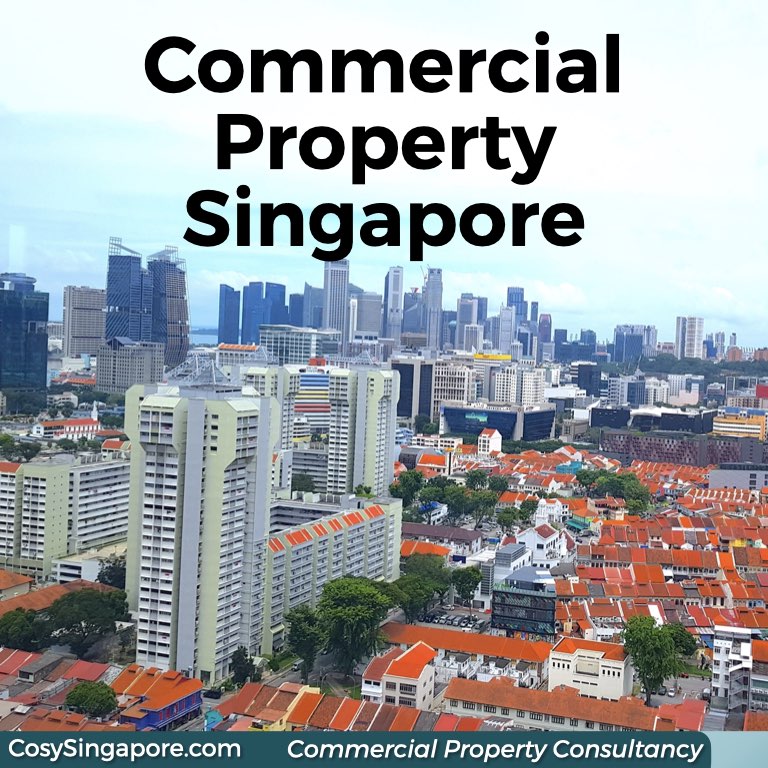
Singapore Commercial Property Investment: A Gateway to Stability, Growth, and Strategic Returns
Singapore, a diminutive island nation with an outsized global influence, has long captivated international investors. Renowned for its political stability, robust economy, strategic location, and pro-business environment, it stands as a beacon of reliability in an often volatile global landscape. While its residential property market frequently garners headlines, it is Singapore’s commercial property sector that truly offers a compelling narrative for sophisticated investors seeking long-term capital appreciation and stable income streams.
This comprehensive article delves into the intricacies of Singapore’s commercial property investment landscape, exploring its fundamental strengths, diverse segments, key investment drivers, potential challenges, and future outlook.
I. The Unwavering Pillars: Why Singapore Stands Out
Singapore’s appeal as a premier investment destination is built upon several foundational strengths that significantly de-risk commercial property investments:
-
Economic Robustness and Political Stability: Singapore consistently ranks among the world’s most competitive economies. Its diversified economic base, spanning finance, technology, biomedical sciences, and advanced manufacturing, provides resilience against global shocks. Coupled with a transparent, corruption-free government and a strong rule of law, investors can operate with confidence, assured of legal protection and policy consistency. This stability translates directly into lower investment risk and a predictable operating environment for commercial tenants.
-
Strategic Location and Connectivity: Situated at the crossroads of major trade routes, Singapore serves as a critical gateway to Southeast Asia and a bridge between East and West. Its world-class Changi Airport and port facilities make it a global logistics and supply chain hub. This unparalleled connectivity attracts multinational corporations, fostering a vibrant ecosystem that drives demand for premium office, industrial, and logistics spaces.
-
Pro-Business Environment and Favourable Policies: The Singaporean government is fiercely pro-business, offering attractive tax incentives, ease of doing business, and a skilled workforce. Policies are designed to attract foreign direct investment and foster innovation. The absence of capital gains tax on property (for non-dealers) and no restrictions on foreign ownership of commercial property (unlike residential) further enhance its allure for international investors.
-
Limited Land and Scarcity Premium: As a small island nation, land is Singapore’s most precious commodity. This inherent scarcity, managed meticulously by the Urban Redevelopment Authority (URA) through long-term master plans, creates a natural scarcity premium for all real estate, particularly commercial properties in prime locations. This controlled supply environment supports asset values and rental growth over the long term.
-
Talent Pool and Innovation Ecosystem: Singapore boasts a highly educated, multilingual, and productive workforce. Its commitment to education, research, and development has cultivated a thriving innovation ecosystem, attracting tech giants, start-ups, and R&D centres. This concentration of talent and innovation fuels demand for modern, high-quality commercial spaces that cater to a dynamic workforce.
II. Diving Deeper: Key Commercial Property Segments
Singapore’s commercial property market is diverse, offering opportunities across various segments, each with its unique demand drivers and risk profiles.
A. Office Market:
The office market is often seen as a bellwether for Singapore’s economic health. It can be broadly divided into:
- Central Business District (CBD) Grade A Offices: These premium assets in areas like Raffles Place, Marina Bay, and Shenton Way command top rents and attract multinational corporations, financial institutions, and legal firms. The "flight to quality" trend, where tenants seek newer, more sustainable, and amenity-rich buildings, continues to drive demand for prime spaces, even in a hybrid work environment. Future-proofing offices with smart technology, flexible layouts, and wellness features is paramount.
- Decentralized Offices: Located in regional centres such as Jurong East, Tampines, and Woodlands, these offer more affordable rents and cater to businesses seeking cost efficiencies or closer proximity to talent pools. Government efforts to decentralize economic activity continue to support growth in these areas.
B. Retail Sector:
Singapore’s retail landscape is dynamic, evolving to meet changing consumer preferences and the rise of e-commerce.
- Shopping Malls: Prime retail spaces in Orchard Road, Marina Bay, and suburban hubs remain attractive, especially those offering experiential retail, F&B, and entertainment options. Resilience post-COVID has been notable, with domestic consumption and tourism recovery bolstering footfall.
- Shophouses: These heritage assets, particularly in conservation areas like Telok Ayer, Tanjong Pagar, and Boat Quay, offer unique investment appeal. Their historical charm, limited supply, and mixed-use potential (F&B, retail, office) make them highly sought after by boutique businesses and investors looking for assets with character and strong capital appreciation potential.
C. Industrial & Logistics:
This segment has experienced significant growth, driven by e-commerce, advanced manufacturing, and the digital economy.
- Warehouses & Logistics Hubs: The explosion of e-commerce has spurred demand for modern, automated warehouses and logistics facilities, especially those with good connectivity to ports and airports. Singapore’s role as a regional distribution hub further solidifies this demand.
- Business Parks & High-Tech Buildings: Located in areas like One-North, Changi Business Park, and International Business Park, these cater to R&D, tech, media, and biomedical companies. They offer campus-like environments with amenities, attracting innovation-driven firms.
- Data Centres: Singapore is a leading data centre hub in Asia, driven by its robust infrastructure, stable power supply, and strategic location. With increasing digitalization and cloud adoption, demand for secure, high-capacity data centres remains exceptionally strong, making them a high-growth, albeit specialized, investment class.
D. Emerging Segments:
As the economy evolves, niche segments like healthcare-related properties (medical suites, nursing homes) and student accommodation are also gaining traction, driven by demographic shifts and Singapore’s status as a regional healthcare and education hub.
III. Investment Drivers & Considerations
Several factors influence investment decisions and the performance of commercial properties in Singapore:
-
Yield vs. Capital Appreciation: Singapore’s commercial property market typically offers moderate rental yields (often 3-5% for prime assets) compared to some emerging markets. However, the primary draw is long-term capital appreciation, driven by scarcity, economic growth, and appreciation of the Singapore dollar. Investors often prioritize total returns (yield + capital appreciation).
-
Interest Rate Environment: Rising interest rates can impact property valuations by increasing borrowing costs and affecting capitalization rates. Investors must closely monitor global and local monetary policies and their potential effect on financing and returns.
-
Government Policies & Urban Planning: The URA Master Plan and various economic blueprints provide a clear roadmap for urban development and land use. Understanding these plans is crucial, as they identify growth corridors, new business hubs, and infrastructure projects that can significantly enhance property values. Examples include the Greater Southern Waterfront, Jurong Lake District, and Punggol Digital District.
-
ESG (Environmental, Social, Governance) & Sustainability Mandates: There is a growing emphasis on green buildings and sustainable practices. Properties with strong ESG credentials often attract premium tenants, command higher rents, and benefit from lower operating costs, aligning with global investor preferences and regulatory pressures.
-
Technological Advancements: Smart building technologies, automation, and AI are transforming property management, tenant experience, and operational efficiency. Investors are increasingly seeking properties that are technologically advanced and future-proof.
-
Global Economic Headwinds: As an open economy, Singapore is susceptible to global economic slowdowns, geopolitical tensions, and supply chain disruptions. These can impact corporate expansion plans, tenant demand, and rental growth.
IV. Navigating the Investment Landscape: Strategies & Entry Points
Investors have several avenues to gain exposure to Singapore’s commercial property market:
-
Direct Ownership: This involves purchasing individual commercial units, shophouses, or entire buildings. It offers direct control and potential for higher returns but requires substantial capital, active management, and carries higher risk concentration. Foreigners face no restrictions on purchasing commercial property.
-
Singapore REITs (S-REITs): S-REITs are publicly listed trusts that own and operate income-generating real estate. They offer a liquid, diversified, and professionally managed way to invest in commercial property, with the added benefit of regular dividend payouts (typically 90% of taxable income must be distributed). Singapore boasts a mature and diverse S-REIT market covering various segments like office, retail, industrial, hospitality, and even data centres.
-
Private Equity Real Estate Funds: These funds pool capital from institutional and high-net-worth investors to acquire, develop, or redevelop commercial properties. They offer access to larger, often more complex deals and professional expertise but typically involve longer lock-up periods and higher minimum investment thresholds.
-
Joint Ventures (JVs): For larger developments or acquisitions, local partnerships can be invaluable. JVs allow investors to share risk, leverage local market knowledge, and access larger projects than they might undertake alone.
V. Potential Challenges & Risks
While Singapore offers compelling opportunities, investors should be mindful of potential challenges:
-
High Entry Costs: Singapore’s prime commercial properties are among the most expensive globally. High per-square-foot prices can translate to lower initial yields, requiring a long-term investment horizon to realize significant capital appreciation.
-
Interest Rate Volatility: As mentioned, rising interest rates can increase financing costs and potentially dampen property valuations, especially for highly leveraged investments.
-
Global Economic Downturns: A severe global recession could reduce corporate demand for space, leading to higher vacancies and downward pressure on rents.
-
Competition: Singapore’s attractive market draws significant local and international competition, which can drive up acquisition prices and compress yields.
-
Disruptive Technologies: While technology creates opportunities, it also poses risks. For example, increased remote work could reduce office space demand in the long term, or automation could impact traditional retail roles. However, Singapore’s market has shown remarkable adaptability.
VI. The Road Ahead: Future Trends & Outlook
Singapore’s commercial property market is poised for continued evolution, shaped by several key trends:
-
Continued Flight to Quality: Premium, well-located, and sustainable assets will continue to outperform, attracting discerning tenants and investors willing to pay a premium for quality and resilience.
-
Decentralization and "Work Near Home" Models: While the CBD remains vital, the development of regional hubs and the prevalence of hybrid work models will likely drive demand for high-quality office and retail spaces in decentralized locations, supporting the "work near home" concept.
-
Growth of New Economy Assets: The exponential growth of data centres, modern logistics facilities, and specialized business parks catering to tech and R&D will continue to be a strong theme, offering higher growth potential.
-
ESG Integration: Sustainability will move from a niche concern to a fundamental investment criterion. Properties with strong green certifications and robust ESG strategies will command a premium and be more resilient to future regulatory changes.
-
Smart City Initiatives and Digital Transformation: Singapore’s commitment to being a "Smart Nation" will continue to integrate technology into urban planning and building management, enhancing efficiency, livability, and property value.
Conclusion
Singapore’s commercial property market presents a compelling proposition for investors seeking a blend of stability, growth, and strategic returns. Its robust economic fundamentals, strategic global position, pro-business policies, and disciplined urban planning create an environment conducive to long-term value creation.
While high entry costs and global economic fluctuations present inherent challenges, the market’s resilience, diverse segments, and forward-looking approach to development offer numerous opportunities. Whether through direct ownership, S-REITs, or private funds, investors who conduct thorough due diligence, understand market nuances, and adopt a long-term perspective are likely to find Singapore commercial property a cornerstone of a well-diversified portfolio, providing a gateway to sustained prosperity in the heart of Asia.