Singapore’s Green Ascent: Pioneering Sustainable Building Solutions for a Future-Ready City
Introduction: The Urban Imperative for Green Buildings
In an era defined by rapid urbanization and the undeniable impacts of climate change, cities worldwide face the formidable challenge of balancing growth with environmental stewardship. For Singapore, a densely populated island nation with limited natural resources and a highly urbanized landscape, this challenge is not merely an option but an existential imperative. As a global financial hub and a model of urban planning, Singapore has not only embraced the concept of green buildings but has actively pioneered and implemented a comprehensive suite of solutions, transforming its built environment into a testament to sustainable development. This article delves into Singapore’s journey towards a greener built environment, exploring the policy frameworks, technological innovations, design philosophies, and socio-economic drivers that have positioned it as a world leader in green building solutions.
The Context: Why Green Buildings are Crucial for Singapore
Singapore’s unique geographical and climatic conditions amplify the urgency for sustainable building practices. Its tropical climate results in high energy consumption for cooling, while its low-lying topography makes it vulnerable to rising sea levels. The urban heat island effect, exacerbated by dense concrete structures, further compounds the challenge. Furthermore, as a nation heavily reliant on imported energy and water, resource efficiency is paramount for national resilience.
Recognizing these vulnerabilities early on, the Singaporean government embarked on a strategic vision to become a "City in a Garden," evolving into a "City in Nature" and ultimately, a sustainable, smart nation. Green buildings are a cornerstone of this vision, serving multiple critical functions:
- Mitigating Climate Change: Reducing energy consumption in buildings directly translates to lower greenhouse gas emissions.
- Enhancing Resource Security: Efficient use of energy, water, and materials lessens reliance on external sources.
- Improving Liveability and Health: Green buildings offer superior indoor environmental quality, contributing to occupant well-being and productivity.
- Building Economic Competitiveness: Fostering innovation in green technologies creates new industries and job opportunities, positioning Singapore as a hub for sustainable urban solutions.
- Adapting to Climate Impacts: Incorporating features like green roofs and facades helps to mitigate the urban heat island effect and manage stormwater.
Pillars of Progress: Policy, Regulation, and Incentives
Singapore’s success in greening its built environment is underpinned by a robust and evolving policy framework, spearheaded primarily by the Building and Construction Authority (BCA).
1. The BCA Green Mark Scheme:
Launched in 2005, the BCA Green Mark scheme is Singapore’s flagship green building rating system, akin to LEED or BREEAM. It assesses buildings based on their environmental impact and performance across various categories: energy efficiency, water efficiency, environmental protection, indoor environmental quality, and other green features and innovation. The scheme has evolved significantly over the years:
- From Voluntary to Mandatory: Initially voluntary, the Green Mark certification became mandatory for all new buildings and existing buildings undergoing major retrofits in 2008. This bold move ensured widespread adoption and set a clear direction for the industry.
- Tiered Ratings: The scheme offers different levels of certification (Certified, Gold, GoldPlus, Platinum, and Super Low Energy (SLE)), encouraging continuous improvement and aiming for higher standards of sustainability.
- Comprehensive Coverage: Green Mark extends beyond commercial and residential buildings to include districts, infrastructure, parks, and even specific green products and services, ensuring a holistic approach to sustainable development.
- Periodic Updates: The Green Mark criteria are regularly updated (e.g., Green Mark 2021) to incorporate the latest technologies, international best practices, and national sustainability targets, pushing the boundaries towards net-zero and positive-energy buildings.
2. Singapore Green Plan 2030:
This ambitious national blueprint outlines Singapore’s strategies for sustainable development over the next decade. Within the built environment sector, key targets include:
- 80-80-80 Goals:
- 80% of new buildings (by GFA) to be Green Mark certified by 2030.
- 80% of buildings (by GFA) to be Green Mark certified by 2030. (This addresses the existing building stock).
- 80% improvement in energy efficiency for best-in-class green buildings by 2030 (compared to 2005 levels).
These targets provide clear benchmarks and demonstrate a strong commitment to decarbonizing the built environment.
3. Financial Incentives and Support:
To catalyze adoption and overcome the initial cost barrier often associated with green buildings, the government has introduced various incentives:
- Green Mark Incentive Scheme (GMIS): Provides funding for building owners and developers to defray the costs of achieving higher Green Mark ratings.
- BCA Energy Efficiency Grant (EEG): Supports small and medium-sized enterprises (SMEs) in adopting energy-efficient equipment.
- Enhanced Tax Allowances: For investments in energy-saving equipment and solutions.
- Gross Floor Area (GFA) Bonus: Developers who achieve higher Green Mark ratings can be granted additional GFA, providing a tangible economic incentive.
Technological Innovations and Design Principles: Building Smarter and Greener
Singapore’s green building solutions are not just policy-driven but also highly reliant on cutting-edge technology and innovative design.
1. Energy Efficiency:
This remains the cornerstone of Singapore’s green building strategy, given the high energy demand for cooling in a tropical climate.
- High-Performance Facades: Extensive use of low-emissivity (low-E) glass, external shading devices (fins, brise-soleils), and double-skin facades to reduce solar heat gain.
- Efficient HVAC Systems: Adoption of chiller plant optimization, demand-controlled ventilation, smart thermostats, and district cooling systems (e.g., in Marina Bay Sands) to reduce energy consumption.
- Smart Lighting: LED lighting with occupancy sensors, daylight harvesting systems, and smart controls to minimize artificial light usage.
- Renewable Energy Integration: Increasing deployment of rooftop solar photovoltaic (PV) panels, and exploration of building-integrated photovoltaics (BIPV) on vertical surfaces. Initiatives like the SolarNova programme accelerate the adoption of solar energy across government-owned buildings.
- Intelligent Building Management Systems (IBMS): Centralized systems that monitor and control various building services (HVAC, lighting, security) to optimize performance, detect anomalies, and enable predictive maintenance.
2. Water Efficiency:
Singapore, a water-scarce nation, prioritizes water conservation in its built environment.
- NEWater and Rainwater Harvesting: Promotion of NEWater (recycled wastewater) for non-potable uses and mandatory rainwater harvesting systems for larger developments.
- Low-Flow Fixtures: Widespread use of water-efficient taps, showerheads, and toilets.
- Smart Water Management: IoT sensors for leak detection and real-time monitoring of water consumption.
- Efficient Irrigation: Drip irrigation systems for landscaping, often using harvested rainwater.
3. Indoor Environmental Quality (IEQ) and Occupant Well-being:
Green buildings in Singapore emphasize creating healthy and comfortable indoor environments.
- Natural Ventilation and Daylighting: Design strategies that maximize natural airflow and daylight penetration, reducing reliance on artificial cooling and lighting. This often involves building orientation, operable windows, and light shelves.
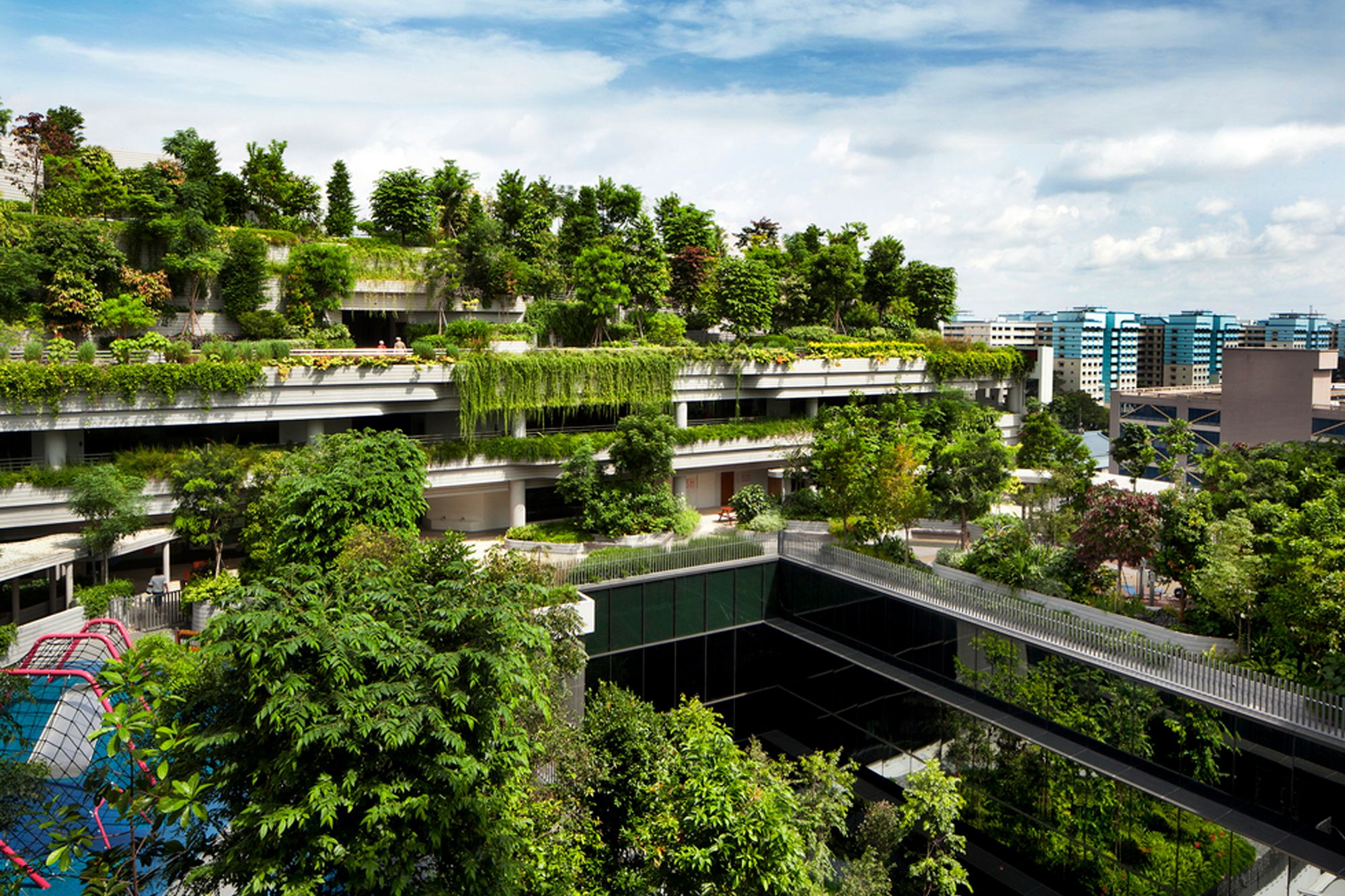
- Biophilic Design: Integrating nature into the built environment through green walls, vertical gardens, sky gardens, and extensive landscaping. This improves air quality, reduces the urban heat island effect, and enhances psychological well-being. Iconic examples include Parkroyal Collection Pickering and Jewel Changi Airport.
- Green Materials: Use of low volatile organic compound (VOC) paints, adhesives, and sealants to improve indoor air quality. Preference for recycled and locally sourced materials to reduce embodied carbon.
- Thermal Comfort: Optimizing building envelopes and HVAC systems to maintain comfortable indoor temperatures and humidity levels.
4. Waste Management and Circular Economy:
Minimizing waste throughout the building lifecycle is a growing focus.
- Construction and Demolition (C&D) Waste Recycling: Regulations and incentives for recycling C&D waste, diverting it from landfills.
- Prefabricated Prefinished Volumetric Construction (PPVC): Modular construction techniques that reduce on-site waste, improve construction efficiency, and minimize disruption.
- Design for Disassembly: Designing buildings with future deconstruction and material reuse in mind.
5. Smart Building Technologies and Digital Transformation:
Singapore’s "Smart Nation" initiative extends deeply into its built environment.
- Internet of Things (IoT): Networks of sensors collecting data on occupancy, temperature, humidity, air quality, and energy consumption.
- Artificial Intelligence (AI) and Machine Learning (ML): Used for predictive maintenance, optimizing building operations, and personalizing occupant experiences.
- Digital Twins: Virtual replicas of physical buildings that allow for real-time monitoring, simulation of operational scenarios, and proactive management.
- Integrated Digital Delivery (IDD): A collaborative approach leveraging digital technologies like Building Information Modelling (BIM) across the entire building lifecycle, from design to operations.
Retrofitting Existing Buildings: A Critical Frontier
While new green buildings showcase the latest innovations, a significant challenge lies in greening Singapore’s existing building stock. Older buildings often have outdated systems, poor insulation, and higher energy consumption. Addressing this "brown agenda" is crucial for achieving national sustainability targets.
- BCA Green Mark for Existing Buildings: This specialized certification scheme encourages owners to upgrade their buildings to meet modern sustainability standards.
- Energy Audits and Retrofit Roadmaps: Government support for energy audits helps building owners identify areas for improvement and develop cost-effective retrofit plans.
- Technological Upgrades: Replacing old chillers with more efficient ones, upgrading lighting to LEDs, improving window glazing, and integrating smart controls are common retrofit strategies.
- Façade Greening and Vertical Gardens: Retrofitting existing facades with greenery not only enhances aesthetics but also provides insulation and reduces heat gain.
Driving Innovation and Research: Living Labs for Sustainability
Singapore actively fosters a vibrant ecosystem for green building research and development.
- BCA Centre for Sustainable Buildings (CSB): Collaborates with industry and academia to conduct research, develop new technologies, and disseminate knowledge.
- Academic Institutions: Universities like the National University of Singapore (NUS) and Nanyang Technological University (NTU) have dedicated research centers focusing on sustainable urban development, advanced materials, and energy systems.
- Living Labs: Singapore embraces the "living lab" concept, where real buildings serve as testbeds for new technologies. Examples include the BCA SkyLab, a rotatable laboratory on the rooftop of the BCA Academy, which tests building envelope and system performance under real tropical conditions. The NUS SDE4 building, a net-zero energy building, is another prime example, integrating cutting-edge design and technology.
- Public-Private Partnerships: Strong collaborations between government agencies, research institutions, and private developers accelerate the adoption of innovative solutions.
Economic and Social Benefits: Beyond Environmental Compliance
The benefits of Singapore’s green building solutions extend far beyond environmental compliance:
- Cost Savings: Energy and water efficiency lead to significant reductions in operational costs over the building’s lifespan.
- Enhanced Asset Value: Green Mark certified buildings often command higher rental yields and sale prices, appealing to environmentally conscious tenants and investors.
- Improved Occupant Productivity and Health: Better indoor air quality, thermal comfort, and access to natural light have been linked to increased productivity, reduced absenteeism, and improved well-being.
- Job Creation: The green building sector stimulates demand for skilled professionals in areas like green design, energy auditing, sustainable construction, and smart building management.
- Global Leadership and Export of Expertise: Singapore’s success serves as a model for other rapidly urbanizing cities, creating opportunities to export its expertise and green technologies.
Challenges and Future Outlook: Towards a Net-Zero Built Environment
Despite its remarkable progress, Singapore’s green building journey is ongoing and faces several challenges:
- Upfront Costs: While long-term savings are clear, the initial investment in green technologies can still be a barrier for some developers and building owners. Continued financial incentives and innovative financing models are crucial.
- Skilled Workforce Development: There is a continuous need to upskill and reskill the workforce to design, construct, and maintain increasingly complex green and smart buildings.
- Behavioral Change: Encouraging occupants to adopt sustainable habits (e.g., responsible energy use) is vital to maximize the performance of green buildings.
- Integration of Biodiversity: Moving beyond aesthetic greenery to truly integrate biodiversity and ecological corridors within the urban fabric remains an ambitious goal.
- Climate Resilience: Future solutions must increasingly focus on climate resilience, adapting buildings to withstand extreme weather events and rising temperatures.
Looking ahead, Singapore is firmly set on a trajectory towards a net-zero energy built environment. The Green Mark 2021 framework, with its emphasis on whole-life carbon assessment and advanced energy performance, reflects this ambition. The next wave of innovation will likely focus on:
- Positive Energy Buildings: Buildings that generate more energy than they consume.
- Deep Decarbonization: Exploring alternative refrigerants, low-carbon construction materials, and circular economy principles.
- Enhanced Digitalization: Leveraging AI, machine learning, and digital twins for predictive building management and personalized occupant experiences.
- District-Level Sustainability: Expanding green solutions beyond individual buildings to entire precincts and urban districts, integrating smart grids, waste-to-energy solutions, and shared amenities.
Conclusion: A Model for Sustainable Urbanization
Singapore’s commitment to green building solutions is a powerful narrative of resilience, innovation, and foresight. From a small island nation with inherent vulnerabilities, it has transformed its built environment into a living laboratory for sustainable urban development. Through a judicious blend of ambitious policies, targeted incentives, cutting-edge technologies, and a holistic design philosophy, Singapore has not only mitigated its environmental impact but also enhanced its economic competitiveness and the quality of life for its citizens.
As the world grapples with the escalating climate crisis and the relentless pace of urbanization, Singapore stands as a compelling model. Its journey demonstrates that with strategic vision and unwavering commitment, cities can indeed build a greener, more sustainable, and future-ready urban landscape, proving that economic prosperity and environmental stewardship are not mutually exclusive but deeply intertwined. The solutions pioneered in Singapore offer invaluable lessons for cities globally, inspiring a collective push towards a more sustainable built environment for generations to come.