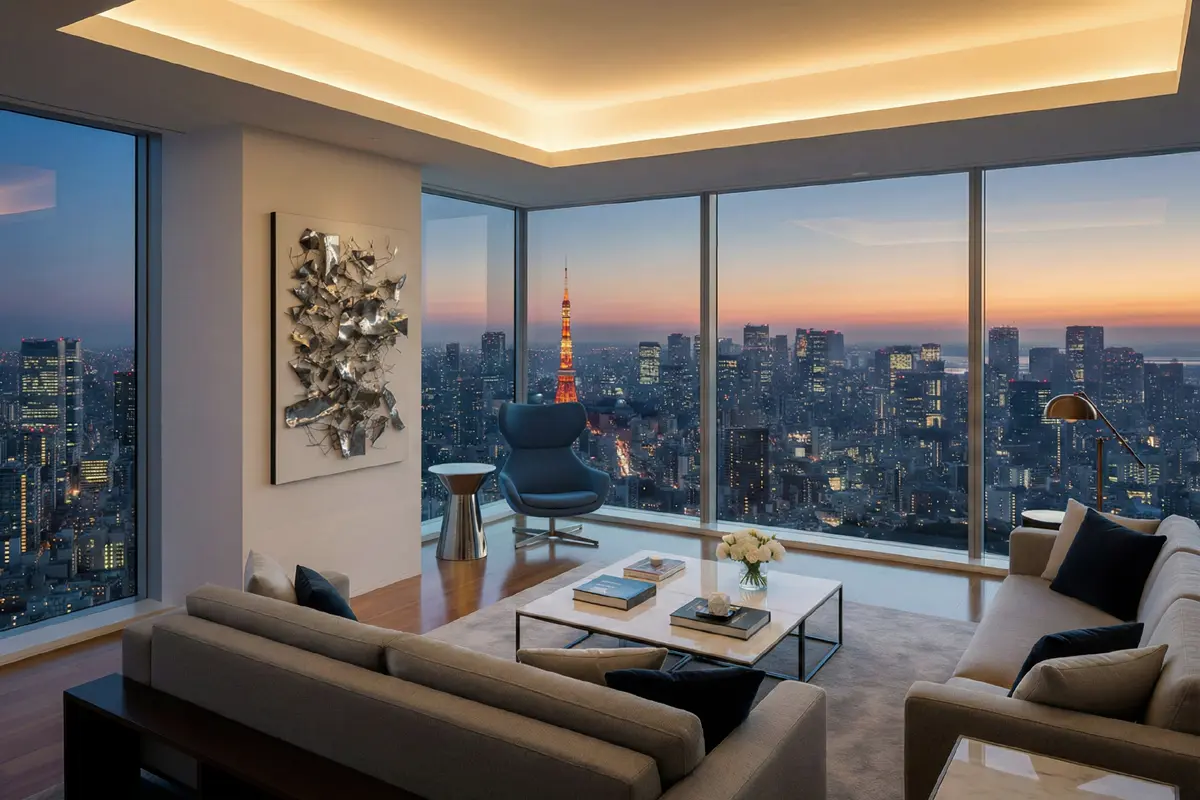
Tokyo Apartment Investment Guide: Unlocking Opportunities in Japan’s Dynamic Real Estate Market
Tokyo, a city where ancient traditions meet futuristic innovation, stands as one of the world’s most captivating metropolises. Beyond its vibrant culture, culinary delights, and unparalleled safety, Tokyo offers a compelling landscape for real estate investors. Its robust economy, stable political environment, and consistent demand for housing make the Tokyo apartment market an attractive proposition for both seasoned and novice international investors.
This comprehensive guide aims to navigate you through the intricacies of investing in Tokyo apartments, providing insights into market dynamics, legal frameworks, financial considerations, and essential tips for a successful venture.
Why Invest in Tokyo Apartments? A Confluence of Compelling Factors
Tokyo’s real estate market is underpinned by several powerful drivers that distinguish it from many other global cities:
-
Economic Stability and Growth: Japan boasts the world’s third-largest economy, with Tokyo serving as its undisputed financial and business hub. The city consistently attracts multinational corporations, fostering a dynamic job market and a steady influx of residents. This economic resilience translates into a stable rental market and sustained property values.
-
Demographic Resilience: While Japan faces an aging population nationally, Tokyo continues to experience population growth due to internal migration. Young professionals, students, and families are drawn to the city’s vast opportunities, creating continuous demand for rental properties, particularly in well-connected areas.
-
Low Vacancy Rates: Reflecting the high demand, Tokyo generally maintains remarkably low apartment vacancy rates. This ensures a steady stream of rental income for investors and reduces the risk of prolonged periods without tenants.
-
Attractive Rental Yields: Compared to other prime global cities like London, New York, or Hong Kong, Tokyo often offers more attractive gross rental yields, especially for properties in the mid-range segment and those slightly outside the absolute prime central locations but with excellent transport links.
-
Safe Haven Asset: Japan’s strong legal system, transparent property ownership laws, and political stability make it a safe haven for foreign investment. The risk of sudden policy shifts or expropriation is minimal, providing peace of mind for international buyers.
-
World-Class Infrastructure: Tokyo’s public transport system is legendary for its efficiency, punctuality, and cleanliness. Properties located near train and subway stations command higher demand and maintain their value, making accessibility a paramount factor in investment decisions.
-
Depreciation Benefits for Older Properties: While older properties in some countries might be seen as liabilities, Japan’s tax system allows for significant depreciation deductions on the building component of older properties, which can substantially reduce taxable rental income, especially for foreign investors subject to Japanese income tax.
Understanding the Tokyo Apartment Market Landscape
Tokyo is not a monolithic entity; it’s a vast collection of wards, each with its unique character, demographics, and property values. Understanding these distinctions is crucial for targeted investment.
Prime Central Wards (Chiyoda, Chuo, Minato, Shibuya, Shinjuku):
These wards represent the heart of Tokyo’s business, entertainment, and luxury living. Properties here are among the most expensive but offer unparalleled convenience, prestige, and strong capital appreciation potential. Demand is high from expatriates, high-net-worth individuals, and corporations seeking premium housing. Rental yields might be slightly lower due to high purchase prices, but capital growth potential is robust.
Residential and Family-Friendly Wards (Setagaya, Meguro, Shinagawa, Suginami, Bunkyo):
These areas offer a more relaxed, family-oriented atmosphere with excellent schools, parks, and slightly larger living spaces. They are popular among Japanese families and long-term residents. While prices are still substantial, they are generally more accessible than the absolute prime central wards. Strong rental demand is driven by local families and professionals seeking a quieter, yet well-connected, lifestyle.
Emerging and Developing Wards (Taito, Sumida, Koto, Adachi, Katsushika):
These wards often present more affordable entry points into the Tokyo market. Areas like Taito (Ueno, Asakusa) and Sumida (Skytree area) are experiencing significant revitalization, with new commercial and residential developments. Koto Ward, particularly around the waterfront areas, has seen substantial growth due to infrastructure projects and modern living complexes. These areas can offer higher rental yields and potential for future capital appreciation as development continues and connectivity improves.
Types of Properties:
- Mansions (Apartments/Condominiums): This is the most common investment type. Japanese "mansions" refer to modern, multi-story concrete residential buildings, akin to condominiums. They come in various sizes, from compact studios (1K/1R) ideal for singles, to larger family units (2LDK, 3LDK).
- Wooden Apartments (Mokuzou Apato): Older, smaller wooden structures. These are typically cheaper to acquire and offer very high depreciation benefits for tax purposes due to their shorter statutory useful life. However, they may require more maintenance and can have higher tenant turnover.
- Serviced Apartments: Fully furnished apartments with hotel-like services. These can command higher rental rates but also come with higher operational costs and require more active management.
- Whole Buildings: For larger-scale investors, purchasing an entire apartment building can offer greater control and potentially higher overall returns, but requires substantial capital and management expertise.
The Investment Process: A Step-by-Step Guide for Foreigners
Investing in Tokyo property as a foreigner is straightforward, though requiring professional assistance. Japan does not impose restrictions on foreign ownership of real estate.
-
Define Your Investment Goals and Budget:
Determine whether you seek capital appreciation, high rental yield, or a balance of both. Establish a clear budget, including not just the property price but also transaction costs (taxes, agent fees, legal fees, etc., which can add 6-10% to the purchase price). -
Engage a Reputable Real Estate Agent:
This is perhaps the most critical step for foreign investors. You need an agent who is:- Fluent in English (or your preferred language): To bridge the language barrier.
- Experienced with foreign clients: Understands their unique needs and concerns.
- Knowledgeable about the Tokyo market: Can provide data-driven advice on areas, property types, and rental potential.
- Licensed and Trustworthy: Essential for due diligence and negotiation.
The agent will help you identify suitable properties, arrange viewings, and guide you through the entire purchasing process.
-
Property Search and Due Diligence:
Once properties are identified, your agent will provide detailed information. Key aspects of due diligence include:- Building Condition: Age, construction quality, maintenance history, renovation plans.
- Management Company: The reputation and financial health of the building’s management association (kanri-kumiai) are vital for long-term value.
- Leasehold vs. Freehold: Most apartments are freehold (ownership of land and building), which is preferred.
- Rental Market Analysis: Your agent should provide comparable rental rates to estimate potential income.
- "Juyo Jiko Setsumei" (Explanation of Important Matters): This legally mandated document, presented by the seller’s agent, covers all critical aspects of the property, including legal status, building details, management rules, and potential risks. It must be explained thoroughly before signing the contract.
-
Making an Offer and Negotiation:
Your agent will assist in drafting a letter of intent (kounyu moshikomi-sho) and negotiating the price and terms with the seller. -
Signing the Purchase Agreement:
Upon agreement, you will sign the official purchase agreement (bai-bai keiyaku-sho). At this stage, a deposit (usually 5-10% of the purchase price) is typically paid to the seller. -
Payment and Closing (Settlement):
The final payment is made, and the property title is transferred. This process involves a judicial scrivener (shiho shoshi) who handles the legal registration of ownership. You will need to provide necessary identification and possibly a registered personal seal (inkan) or a notarized signature. -
Post-Purchase: Property Management and Tenancy:
Unless you plan to live in the apartment yourself, you will need a property management company. They handle:- Marketing the property and finding tenants.
- Tenant screening and background checks.
- Lease agreement preparation and renewal.
- Rent collection.
- Maintenance and repairs.
- Handling tenant inquiries and issues.
- Periodic inspections.
Management fees typically range from 3-8% of the monthly rent.
Financing Your Tokyo Apartment Investment
Securing financing as a non-resident foreign investor in Japan can be challenging but not impossible:
- Cash Purchase: The simplest and most common method for foreign investors. Eliminates interest payments and complex loan applications.
- Japanese Banks: Most major Japanese banks are reluctant to lend to non-residents unless they have a strong, long-term connection to Japan (e.g., permanent residency, Japanese spouse, or a substantial business presence). Even then, LTV (Loan-to-Value) ratios are often conservative.
- International Banks/Offshore Financing: Some international banks with a presence in Japan or offshore lenders may offer financing to foreign investors, often requiring a larger down payment and potentially higher interest rates. Criteria vary widely.
- Using Existing Assets Abroad: You might be able to secure a loan against assets (property, investments) in your home country and use those funds for a cash purchase in Japan.
Legal and Tax Considerations
Understanding the legal and tax framework is paramount for any investor.
Legal System:
Japan has a robust and transparent legal system. Property ownership is clearly defined and protected. The process of buying and selling real estate is highly regulated, ensuring fairness and minimizing disputes.
Taxes:
Foreign investors are subject to Japanese taxes. It’s crucial to consult with a qualified tax accountant specializing in international real estate.
-
Acquisition Taxes:
- Stamp Duty (Inshi-zei): Paid on the purchase contract, varying by property value.
- Registration Tax (Touroku Menkyo-zei): Paid to register the property in your name, based on the property’s assessed value.
- Real Estate Acquisition Tax (Fudousan Shutoku-zei): A one-time tax levied by the prefecture, typically 3-4% of the assessed value (which is usually lower than the market price).
-
Ownership Taxes:
- Fixed Asset Tax (Kotei Shisan-zei): Annual property tax levied by the municipality, typically 1.4% of the assessed value.
- City Planning Tax (Toshi Keikaku-zei): Annual tax levied by the municipality for properties in urban planning areas, typically 0.3% of the assessed value.
-
Rental Income Tax:
- Foreign investors must file a Japanese tax return for rental income.
- Income tax is progressive, ranging from 5% to 45%, plus a local inhabitant tax (Jumin-zei) of 10%.
- Crucially, you can deduct various expenses, including property management fees, repair costs, insurance, interest on loans, and depreciation. Depreciation can significantly reduce taxable income, especially for older properties.
-
Capital Gains Tax (Upon Sale):
- Short-Term Capital Gains (held less than 5 years): Taxed at approximately 39.63% (30% national, 9.63% local).
- Long-Term Capital Gains (held 5 years or more): Taxed at approximately 20.315% (15% national, 5.315% local).
- There’s also a withholding tax (Genzen Choshu) of 10.21% on the sale price for non-residents, which can be offset against your final capital gains tax liability.
-
Inheritance Tax: Japan has a significant inheritance tax. If you own property in Japan, it will be subject to Japanese inheritance tax regardless of your residency, potentially also being subject to inheritance tax in your home country (though double taxation treaties may apply). Planning is essential.
Risks and Challenges
While Tokyo offers immense potential, investors should be aware of potential challenges:
- Language and Cultural Barrier: This is the most significant hurdle. Professional assistance is non-negotiable.
- Earthquakes: Japan is an earthquake-prone country. However, building codes are among the strictest in the world. Modern buildings are designed to withstand significant seismic activity. Earthquake insurance is highly recommended.
- Depreciation of Older Buildings: While beneficial for tax purposes, physical depreciation means older buildings may require more maintenance or renovations over time. The value of the building itself decreases, though the land value generally holds.
- Tenant Turnover: While vacancy rates are low, tenant turnover can incur costs (cleaning, repairs, agent fees for new tenants).
- Regulatory Changes: Tax laws and property regulations can change, potentially impacting investment returns. Staying informed through your advisors is crucial.
- Resale Market for Older Properties: While there’s demand, reselling very old or niche properties might take longer than newer, more liquid assets.
Tips for a Successful Tokyo Apartment Investment
- Work with a Team of Local Experts: This cannot be stressed enough. Engage a reputable real estate agent, a bilingual judicial scrivener, and an international tax accountant from the outset.
- Focus on Location, Location, Location: Proximity to train stations, amenities, and popular districts is paramount for rental demand and long-term value.
- Understand the Local Rental Market: Research typical rents for different property types and sizes in your target areas.
- Consider Newer vs. Older Properties: Newer properties (under 10-15 years old) offer modern amenities and lower immediate maintenance, often appealing to a broader tenant base. Older properties (20+ years) can offer higher rental yields due to lower purchase prices and significant depreciation benefits for tax purposes, but require careful inspection.
- Factor in All Costs: Be sure to budget for acquisition taxes, agent fees, legal fees, ongoing property taxes, management fees, maintenance reserves, and potential renovation costs.
- Adopt a Long-Term Perspective: Tokyo real estate is generally a stable, long-term investment rather than a speculative short-term flip.
- Embrace Professional Property Management: Especially as an overseas investor, a reliable property management company is your eyes and ears on the ground, ensuring your investment is well-maintained and generating income.
- Stay Informed: Keep abreast of market trends, economic forecasts, and any regulatory changes that might impact your investment.
Conclusion
Investing in Tokyo apartments offers a unique opportunity to participate in one of the world’s most stable and dynamic real estate markets. With its robust economy, consistent rental demand, transparent legal system, and attractive yields, Tokyo presents a compelling case for international investors seeking diversification and long-term growth.
While the process requires careful planning, diligent research, and most importantly, the guidance of experienced local professionals, the rewards can be substantial. By understanding the market nuances, navigating the legal and tax landscape, and adopting a strategic long-term approach, you can unlock the vast potential of Tokyo’s apartment investment opportunities and secure a valuable asset in this truly extraordinary global city.